The most important things are power, hydro e-brake, more power, crazy angle kit, built motor to handle all the power, all the camber, latest trending body kit and rare 3-piece wheels.
Yes, I am joking. You don’t need any of that to become a skilled driver. I’ll even take it a step further and say that starting with a powerful, well setup car will actually hurt your initial progression. Starting with less can prove to be a lot more in the long run.
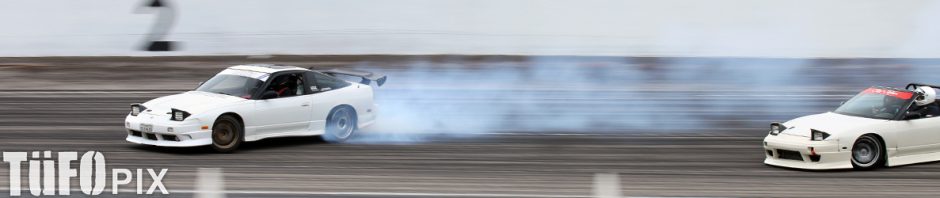
Nate Richards’ setup here is almost standard for pro drifters nowadays. To a beginner, this is the definition of frustration and is the path to becoming a slow driver.

One thing I’ve learned over the last 13+ years as both a driver and an observer of how others have progressed is that when you’re starting out, less is more.
Power is definitely a ton of fun to have but having it too early can make the initial learning phase much more difficult. Additionally, it can cause an over reliance on the car. With a powerful motor, things happen very fast which is exaggerated by inexperience. Intentional driving with full control will instead be reaction based driving where you’re simply trying to keep up with what the car wants to do. Speed and momentum will be replaced with a dependence on e-brake initiations and slower approaches using the motor’s power to pull you through a turn. And that’s all assuming you’re able to keep from spinning out as soon as boost kicks in or the pedal hits the floor on something with a ton of torque. When there’s a powerful motor to get you through tough tracks, you learn to rely on that power instead of being able to read the track to know how to set up turns 2 and 3 to sling you through 4 and 5 at warp speed.
Depending on the car, around 200 or less HP is great for learning. Eric Norman from Team RPM has over a decade of drifting under his belt and can more than hold his own with a bone stock SR20DET in his S13.
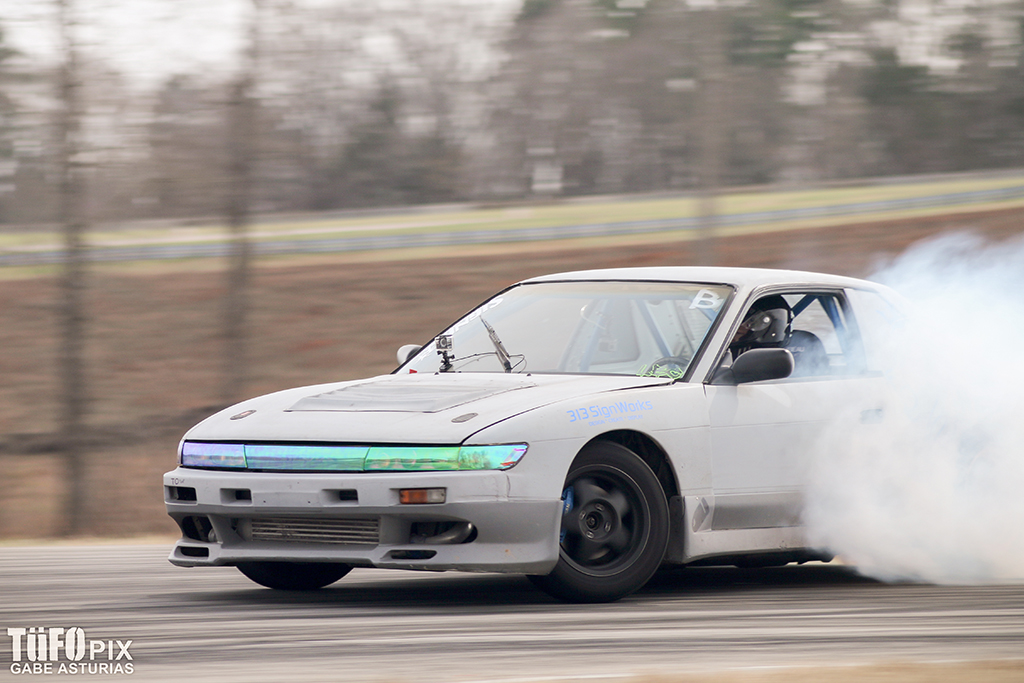
Starting with a fairly stock setup will advance your skills and understanding as a driver quicker than most anything else. As you gain seat time, you’ll learn ways to compensate for the drawbacks of the car whether or not you’re consciously aware of it. You’ll also get more kudos for using momentum to fling your car all the way down a narrow straight in a single drift while some of the V8 swapped and big boost guys are having to manji or use their e-brake to make it through.
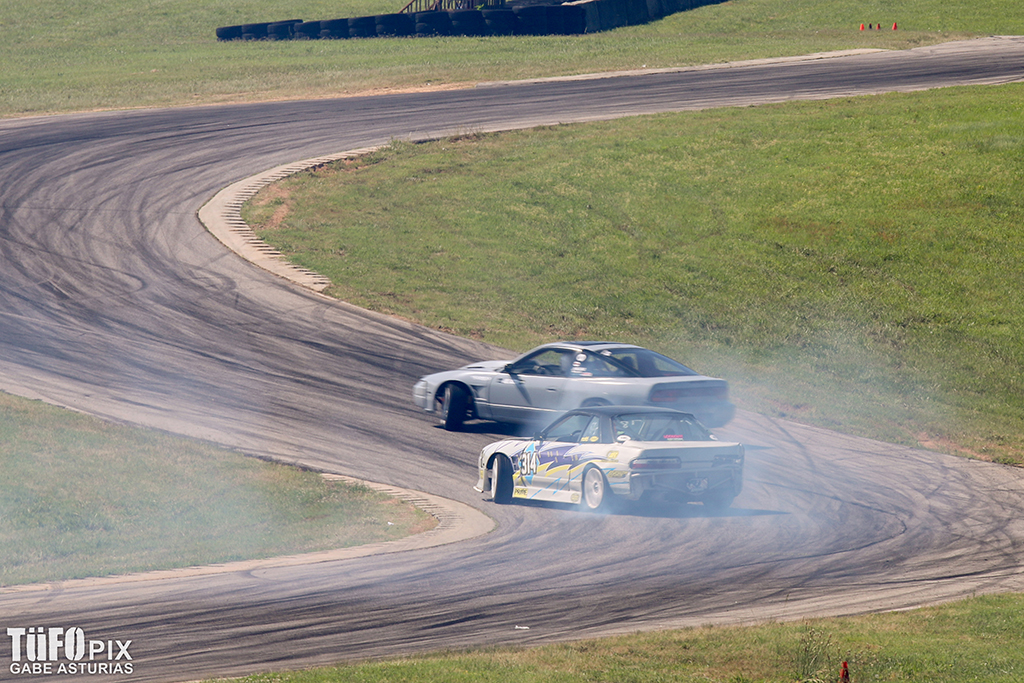
These are both good drivers. The main difference in their setup is the LS1 V8 in Kyle Wood’s car vs the stock KA24DE Dan Savage is using to keep up.
Due mainly to a lack of funds, I waited until I literally couldn’t go any further with my car before I finally added power with a turbo. I was competing to earn a NOPI license and finished 2-points behind the guy who earned his at a competition where I was driving the only non-turbo car. V8 swaps still weren’t a common thing yet. Angle and speed as well as each clipping point were judged on a 0-3 point scale and then combined for a total that would be your run’s score. Overall speed is where I lost those 2 points despite not taking my foot off the gas and doing everything I could to maintain speed with my bone stock KA24DE. I went home, pieced together a turbo kit then earned my license at a competition the day after getting my new turbo setup running. Sliding with double the power I had been used to was an easy adjustment since I had focused on building my skills as a driver first without relying on the car to do the work for me. I’ve noticed that those who focus on increasing their car’s power early on seem to have a harder time getting the hang of things. Those who stay stock longer and focus on their driving skills take off once they upgrade their car to meet their skill.
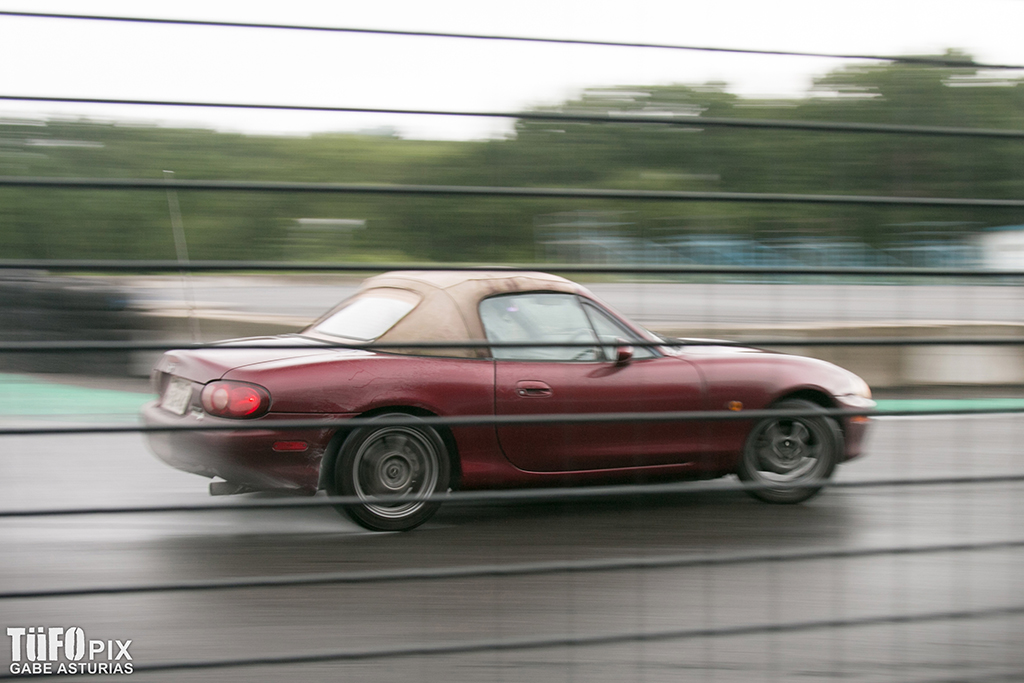
The biggest upgrade that can be done to a car, aside from changing the tires, is to modify the thing turning the steering wheel. Starting with low power will teach you how to go as fast as you can while using the car’s momentum to carry you through turns with minimal speed loss. Stockish suspension will help teach you how to shift the car’s weight to aid in initiating a drift and to fine tune your angle mid drift. I’ll touch back on the suspension more in a bit. Keeping your hand off the e-brake except to extend a drift will make you a speed demon and teach you exactly where, when, how and what it takes to break the back end loose.
There’s a reason AE86 drivers are respected for what they can do with a little 4AGE. Here’s Travis Vanderpool with his 86.
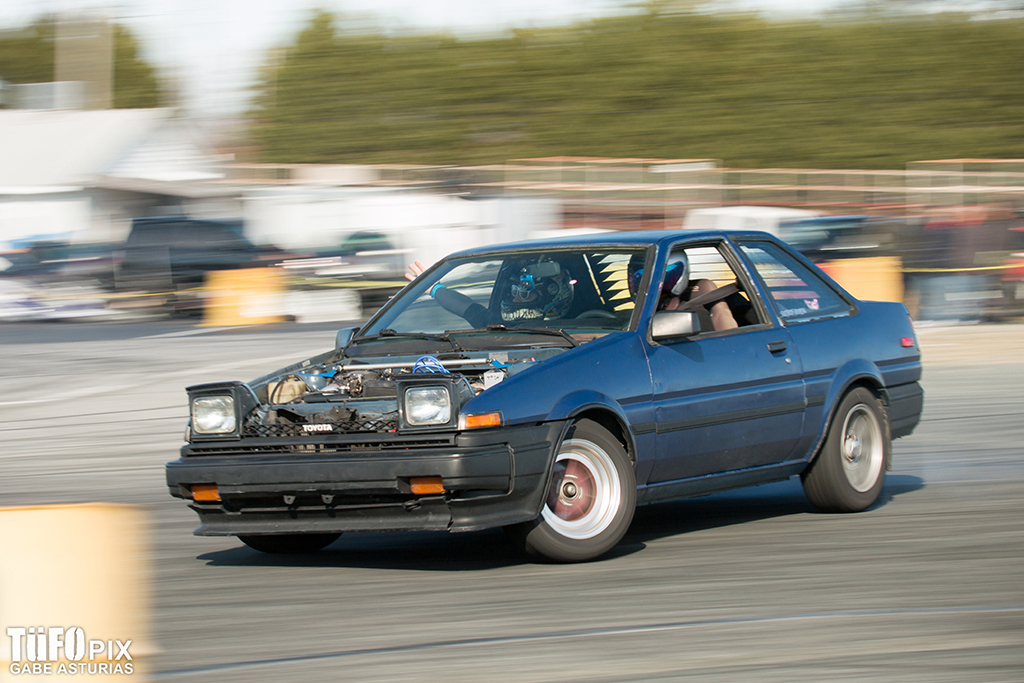
Drifting is inherently a braking technique and will always be the slower way around a paved turn. Your approach and methods should act as a way to counteract this and maintain speed with raw power serving as an assistant. This is why it’s good to master those driving techniques and build your skill before adding a ton of power. An absolute must is to dial in your steering. If you still aren’t comfortable with timing your steering on initiations and transitions, the last thing you need is big boost or a V8 swap.
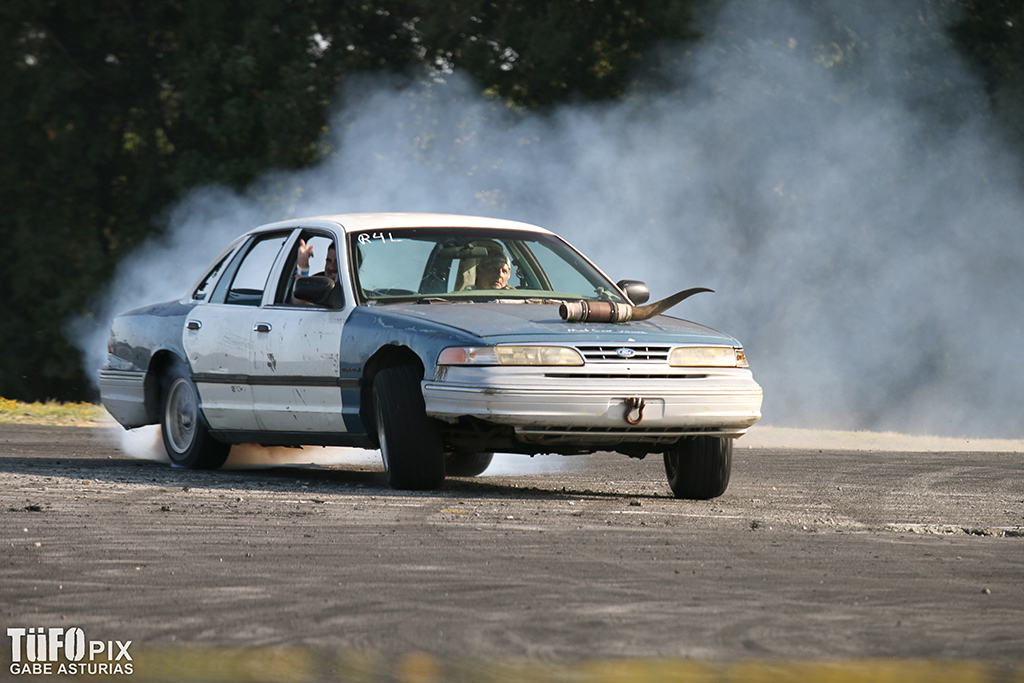
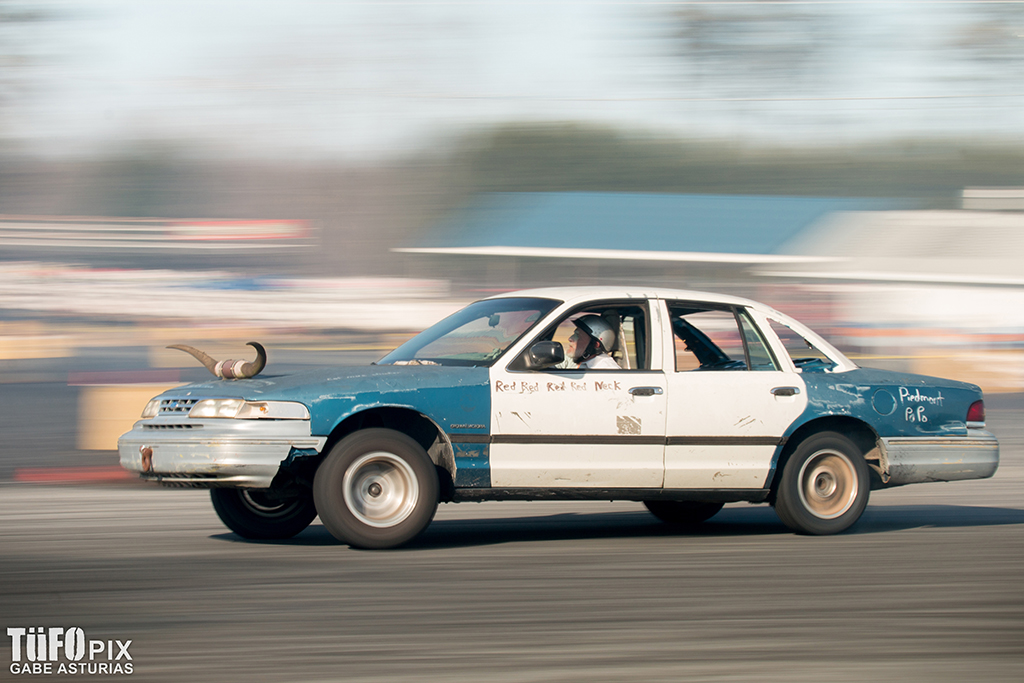
That is unless your car came with a V8 in which case it’s probably a larger, heavier car or a Mustang. T.L. has been sliding this Crown Vic for a few years now and his progression from start until now has been a night and day difference.
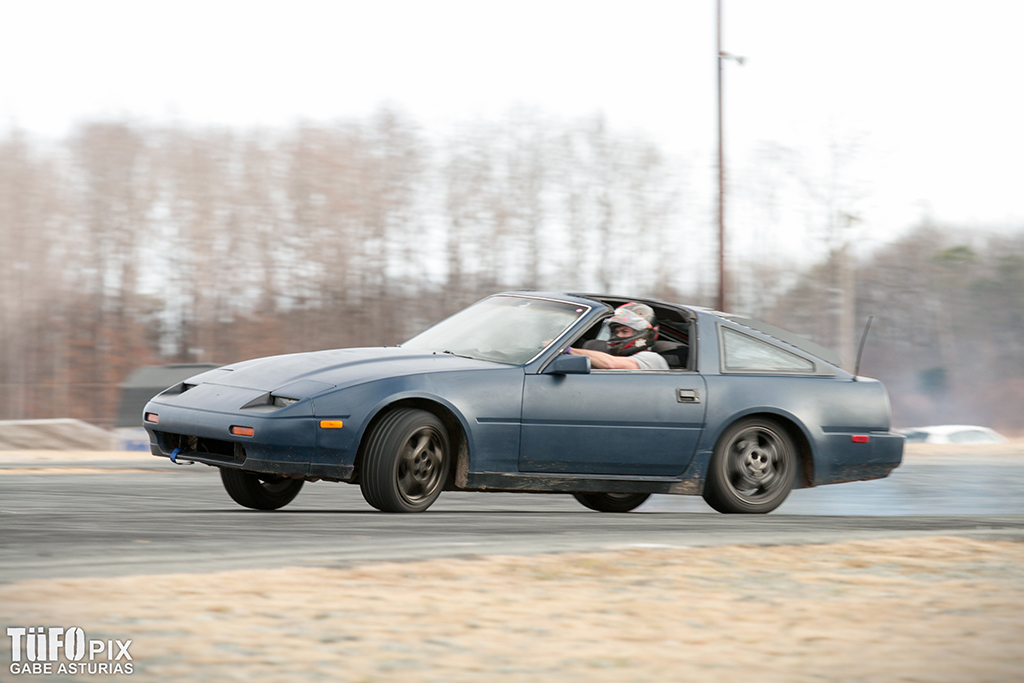
Do I suggest starting out with soft, factory suspension? Ideally, yes, but sliding what feels like a water bed can be very annoying. Weight shift still happens whether or not the car is leaning all over the place. So, toss on some coilovers or a decent spring and strut setup and leave the barf bags at home. But, don’t fall victim to the misconception that stiffer is always better. Stiffer suspension to a certain extent is good but going too stiff will cause bounce and unpredictable loss of traction on surfaces that aren’t perfectly smooth.
Z31 water bed.
Now on to the question at hand: What should you start off with if you want to eventually slay tires like the love child of Katsuhiro Ueo and Naoki Nakamura? As I said before, less is more. A rear wheel drive car with 3 pedals, limited slip or welded differential and, to reduce frustration, stiffer suspension assuming you aren’t starting with a pickup will be perfect. An unmodified pickup with stiff rear suspension is a zero traction, bouncy castle. To keep from having to brace yourself while drifting, a decent seat and 4-point harness are great to have as well. For the first year or two, this is all you should need.
A few examples:
Richie Proszaj’s S13 240sx
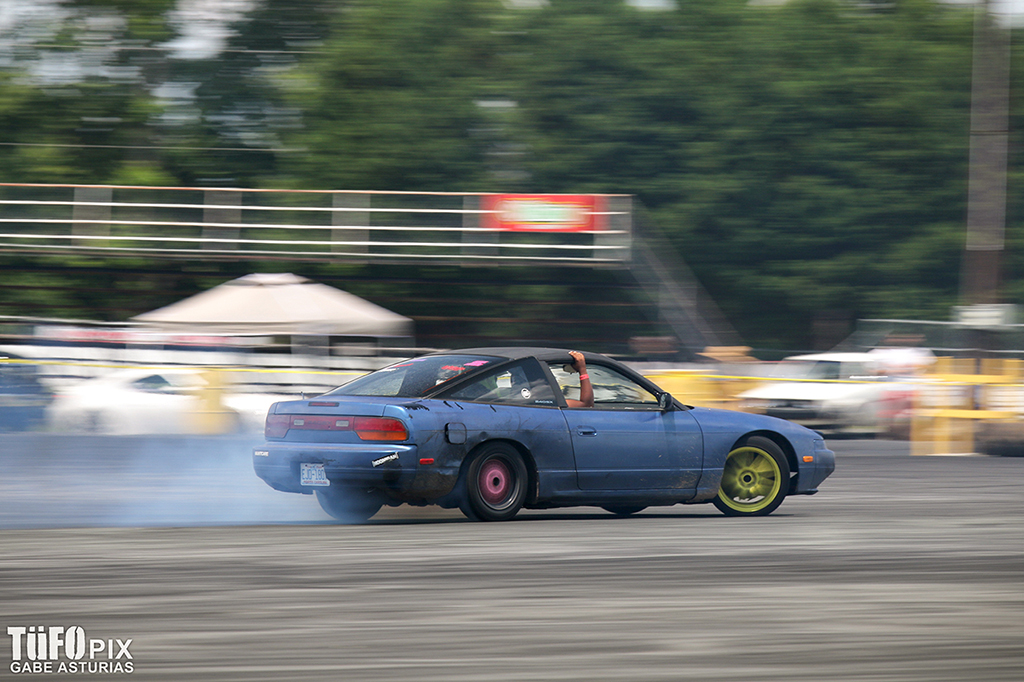
Riley’s E36 BMW
James Burkholder’s IS300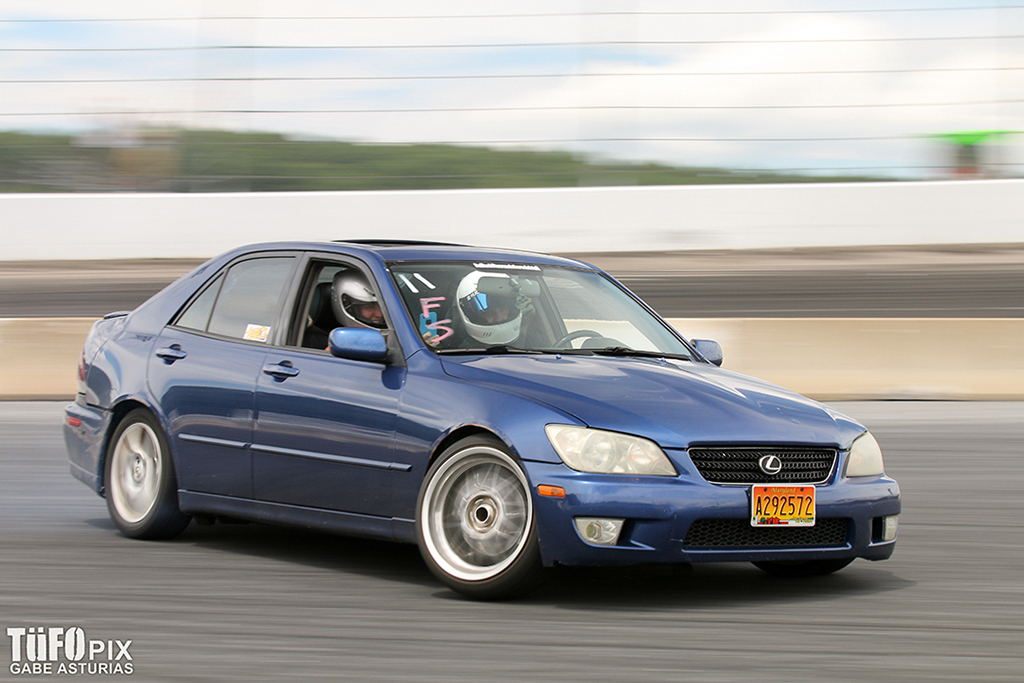
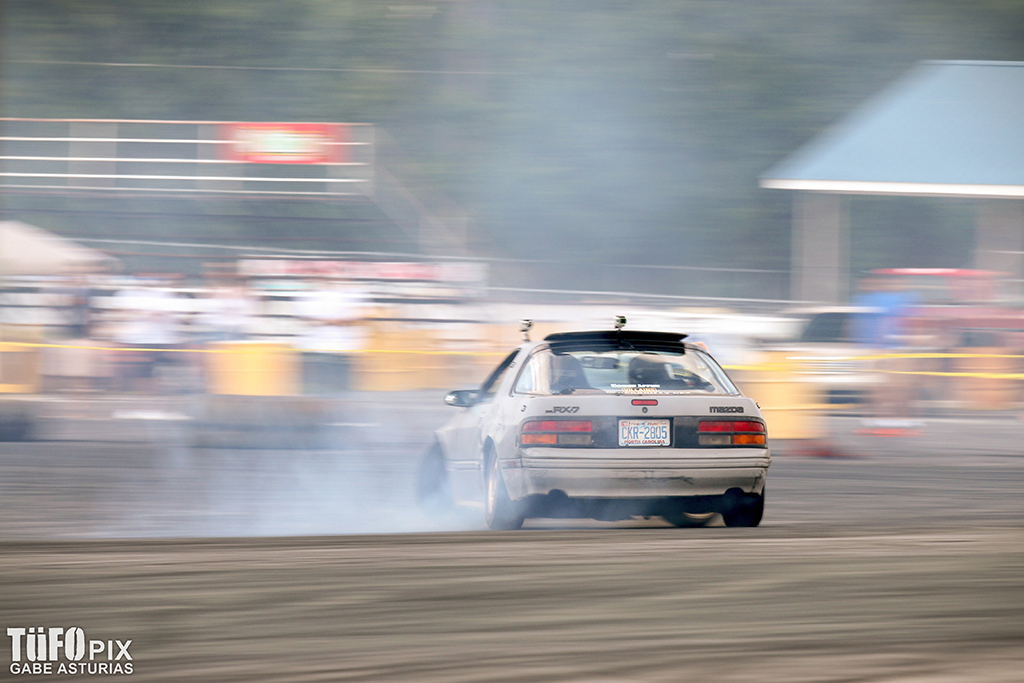
Taylor Walker’s FC RX7
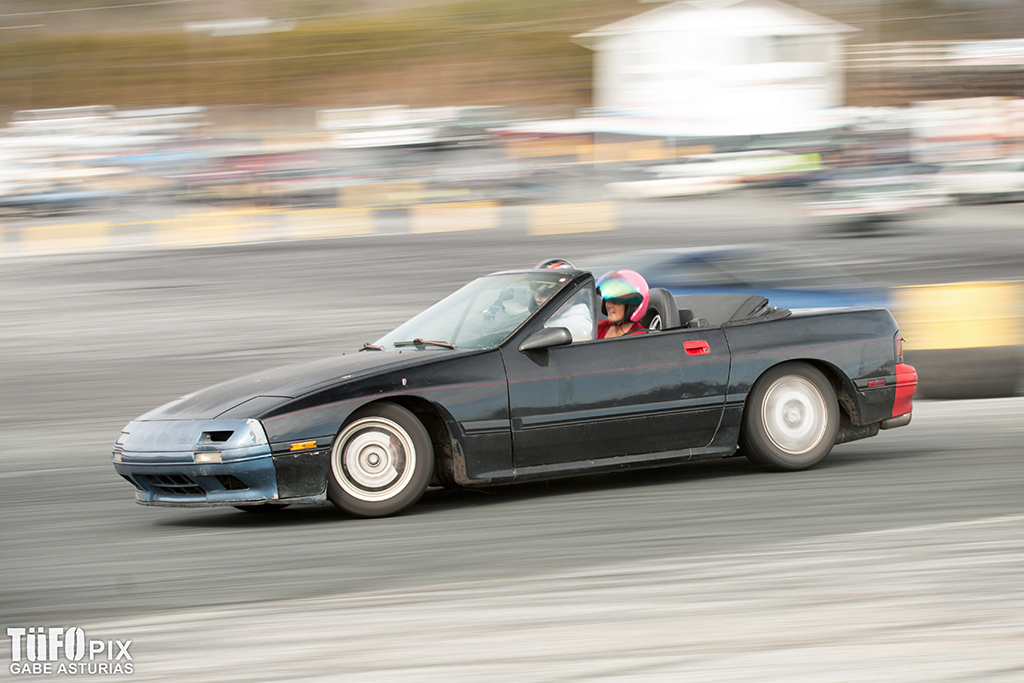
Eventually you’ll hit a point where you’re doing all you can but the car itself is holding you back. It’ll be most noticeable with the lack of power when all the feint initiations and clutch kicks in the world are proving not enough for higher speed tracks or for keeping up with more fierce competition. That is the ideal time to slap on a turbo or swap in a more powerful motor. That’s when it’s your level of skill that is enabling you to link fast, technical tracks and it’s time for your car to catch up. Once you match that skill with an evenly setup car, you’ll be surprised at what you can do.
T.L. may have hit that point already but his Crown Vic still fits his rowdy style of driving perfectly.
With all that said, you can start with whatever setup you want because seat time is ultimately going to be the most important tool for progression. But, from what I’ve learned over the years, I’d say starting with less is the best route for becoming the most well rounded driver one can be. Also, as “uncool” as some may make it out to be, autocross is an amazing way to really learn the limits of a car and how to figure out the best lines through a track.
Your initial goal when learning to drift should be to outgrow what your car can do.
Zach Sells and Ryan Murry agree.
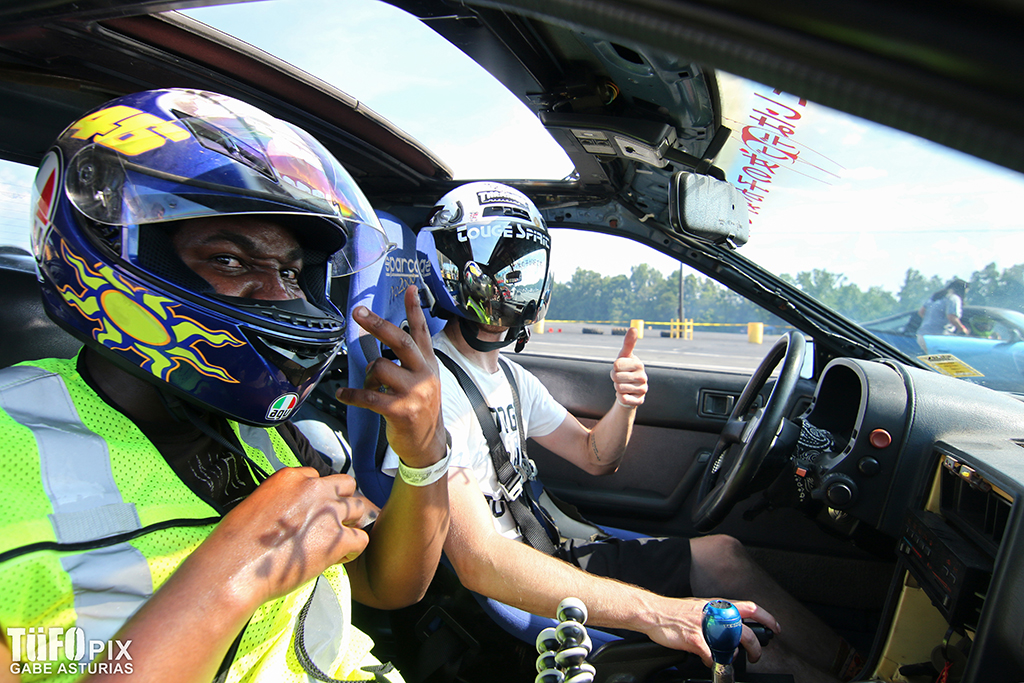
Richie Proszaj, Nygel Adjei and Dustin Walker
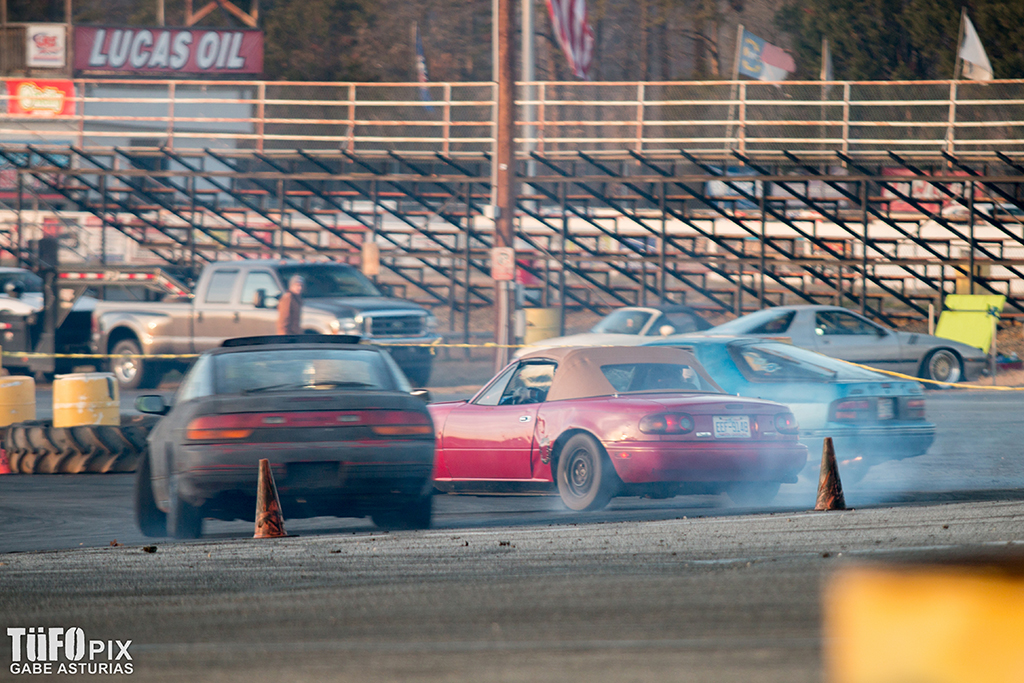
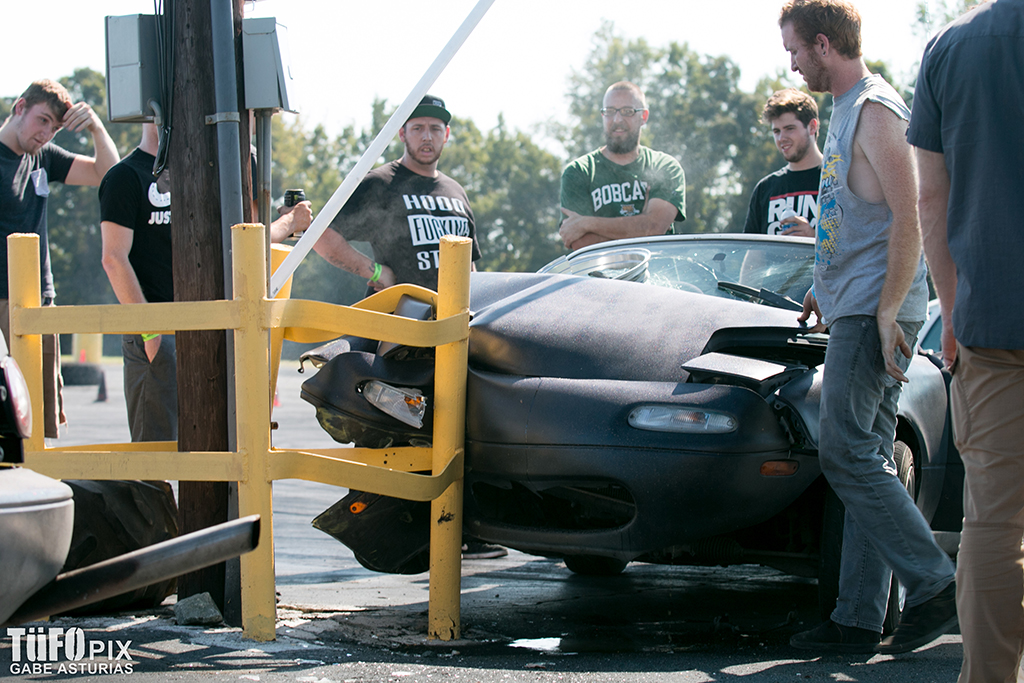
An added perk to starting with less is that there’s less to lose. That’s when, not if, you hit a wall, barrier, another car or when another driver hits you while you’re running with other novice drivers. There’s nothing worse than building what could be the envy of any car magazine or engine builder just to smash it into a wall on your first run because you’re still learning how to time your steering.
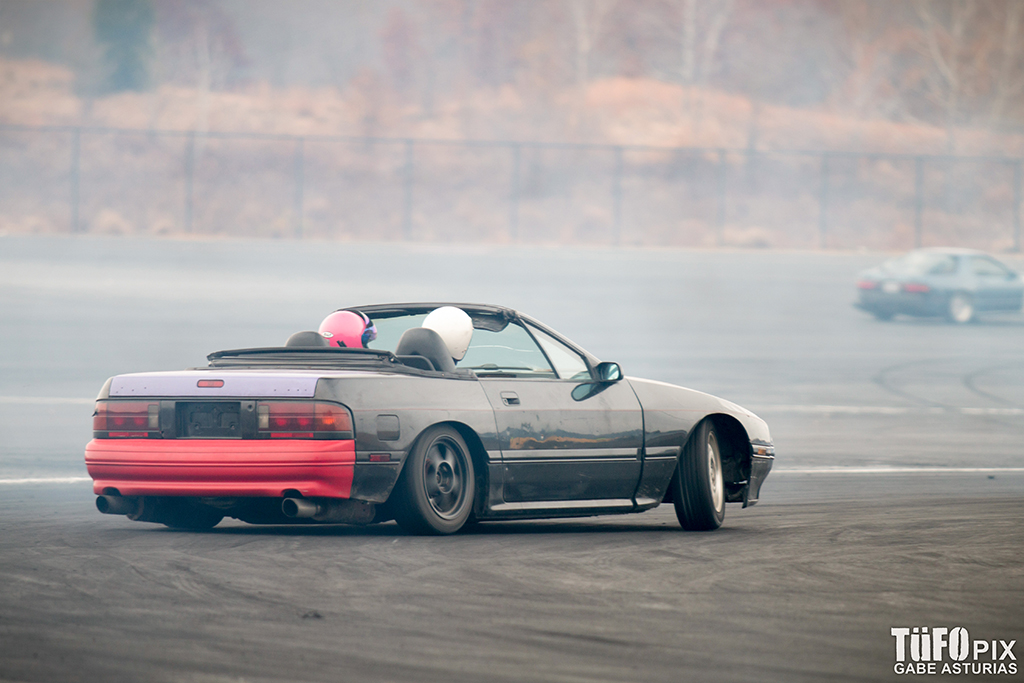
Alright, go drift.
 TUFOpix